

ProjectsEuropeKazakhstanConservation Programme for the Saiga Antelope - Altyn Dala Conservation Initiative
Conservation Programme for the Saiga Population of Kazakhstan
OBJECTIVE:

To conserve the remaining population through the creation of large reserves in Kazakhstan steppe landscapes and through the support of anti-poaching units.

ALTYN DALA CONSERVATION INITIATIVE

The saiga antelope (Saiga tartarica tartarica) - one of the world’s most threatened mammals was brought to the brink of extinction. Now conservationists are giving this Central Asian antelope and its diverse steppe habitat renewed hope.

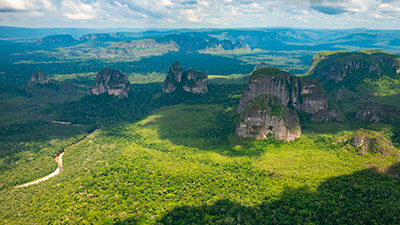
The conservation programme known as the Altyn Dala Conservation Initiative (Altyn Dala means ’golden steppe’ in Kazakh) is creating an integrated network of protected grassland habitats reserves extending through central Kazakhstan. Over 5.2 million hectares have already been legally protected, but Altyn Dala plans to increase this by up to five million hectares. This network will protect and restore vast areas of steppe grassland and semi-desert that make up the typical landscapes of Central Asia. Historically, saiga antelope and other grazing mammals, such as kulan (wild asses), helped to maintain these grasslands and the continued existence of these grazers is crucial to preserving this area, of of the largest remaining natural grasslands left in the world.

Working in close cooperation with the Committee of Forestry and Hunting of the Ministry of Agriculture, and the Ministry of Environment Protection of the Republic of Kazakhstan, the Altyn Dala Conservation Initiative is an international partnership of the Association for the Conservation of Biodiversity of Kazakhstan (ACBK), with the Royal Society for the Protection of Birds (RSPB) RSPB and the Frankfurt Zoological Society.

BACKGROUND/CONTENT:

In the 1970s, there were an estimated 1,000,000 saiga antelope grazing the grasslands of Kazakhstan. After the collapse of the Soviet Union economic hardship of rural populations together with the opening of the borders to China led to massive poaching of the antelopes both for their meat and their horns, which are used by practitioners of traditional Chinese medicine. By 2002, the antelope’s population was brought to collapse to the brink of extinction, and targeted poaching of males for their horns caused a major gender imbalance in the remaining population, exacerbating the dire situation. As a result, the World Conservation Union (IUCN) listed the species as Critically Endangered.

Prehistorically, the saiga used to occur across Europe as far west as Britain. Today, Kazakhstan is still home to the largest part of the world population, but there are only an estimated 81,000 individuals left. Smaller populations occur in European Russia and Mongolia, and antelopes from Kazakhstan winter in Uzbekistan and possibly Turkmenistan.

The saiga antelope is crucial to the conservation of steppe grasslands: it disperses seeds of steppe plants over large distances; its droppings help to fertilise the soil; and the trampling action of its hooves pushes seeds into the soil, allowing them to germinate. The continued grazing of saiga antelope and other large native mammals has kept the grasslands open, creating habitats for characteristic birds of the steppe, including the great bustard and the Critically Endangered sociable lapwing. Like the saiga antelope, both of these birds are facing global extinction. A healthy population of saiga antelope also creates a niche for scavenging birds and mammals, such as the black vulture and wolves.

Fortunately, rigorous recent conservation efforts have led directly to an improving picture for the saiga antelope, with the primary Kazakh population in the Altyn Dala region rising from below 4,000 animals in 2002 to over 45,000 in early 2009. Comparable to the famous vast herds of wildebeest on the African plains, saiga antelope are migratory but very little is known about their current distribution and migratory routes. In October 2009 for the first time, 20 antelopes have been tracked by satellite as they move south perhaps up to 800 kilometers across Kazakhstan from their calving grounds to their remote wintering sites.

PROJECT PARTNER
  • WWF-International
  • Royal Society for Protection of Birds (RSPB)
  • Association for Conservation of Biodiversity of Kazakhstan (ACBK)
  • Convention on Migratory Species (CMS)
  • Committee for Forestry and Hunting, Kazakhstan, Ohkotzooprom
  • Bundesministerium für Umwelt, Naturschutz und Reaktorsicherheit (BMU)
  • Gesellschaft für Technische Zusammenarbeit (GTZ)
  • Bundesministerium für Wirtschaftliche Zusammenarbeit (BMZ)
  • Centrum für Internationale Migration (CIM)
  • Gregor Louisoder Umweltstiftung
  • Federal Environmenal Agency, Germany (UBA)
  • Federal Agency for Nature Conservation, Germany (BfN)
  • Darwin Foundation (UK)
  • Ministry for Environment, Kazakhstan
  • Institute for Zoology, Almaty

Supported by