
Objective:
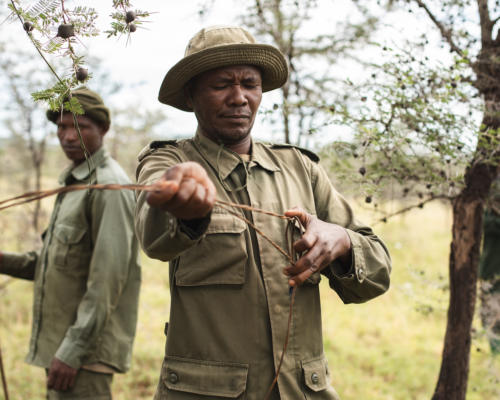
Protection and surveillance of the rhinos in the borderland between Tanzania and Kenya.
Background:
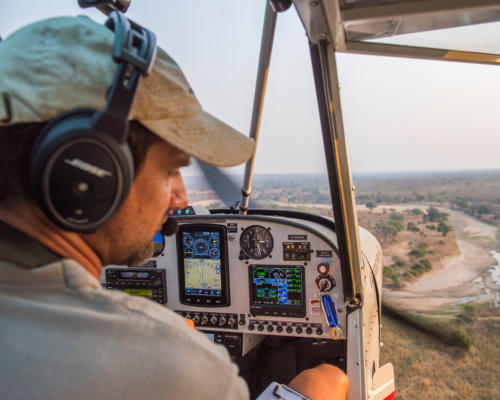
The small population of 25 to 30 black rhinos in the borderland between Kenya and Tanzania is constantly monitored. In 2006 individual rhinos which cross the international border between the Serengeti and the Mara National Reserve or live in the peripheral areas of the Mara Reserve have been equipped with radio transmitters. The long-term aim is to connect the Mara population with the existing Serengeti/Ngorongoro populations.
Project Partner:
Kenya Wildlife Service and Narok County Council
Objective:
Protection and increase of the black rhino population in the Serengeti through support of all rhino protection and monitoring activities.
Background/Content:
The black rhino population in the Moru area of Serengeti National Park has developed well in the last few years thanks to constant surveillance and consequent shielding of the animals from tourism interference. Visitors are only allowed to drive through the area on a few roads. Twenty-one rhinos now live in the Moru area again (up from three!).
Project Partner:
Tanzania National Parks (TANAPA)
Objective:
The re-establishment of a viable, breeding, free-ranging population of black rhino (Diceros bicornis minor) in North Luangwa National Park – for the enhanced conservation status of the species and improved ecological integrity of the area.
Background/Content:
Zambia was once home to the third largest population of Black Rhino on the continent but efforts to save this charismatic and highly endangered animal through the late 1970s and early 1980s failed to stem the demand for its horn. The illegal trophy poaching decimated Zambia’s Black Rhino population and the species was declared nationally extinct in 1998. Creating a safe environment for Black Rhino in Zambia became a focus of NLCP and the first of several Black Rhino translocations took place in 2003 helped by support from donor funding partners.
A total of 25 Black Rhino have been donated through a southern African region agreement. Four translocations have successfully taken place since 2003 and the final translocation is planned for 2009. Since the first animals arrived, four of the adult females have given birth to calves – the first Zambian bred black rhino in over two decades and signs that this remarkable creature can be a conservation success in Zambia once again.
FZS Project Leaders:
Ed Sayer, Claire Lewis
Project Partners:
US Fish and Wildlife Service
Conservation Foundation
SADC Regional Programme for Rhino Conservation
Save the Rhino International
Save the Rhino Trust Zambia
South African National Parks
Eastern Cape Parks Board, South Africa
North West Parks Board, South Africa
Ezemvelo KZN Wildlife, South Africa
Zambia Wildlife Authority
For more detailed information on this project, please click here.
Objective:
Serengeti Ecosystem rhino population strengthened to become viable and secure by increasing the rhino population in the Serengeti ecosystem through repatriation of michaeli rhinos from South Africa.
Background:
There are currently only two rhino populations of the Serengeti Ecosystem, in the Moru area of the Serengeti National Park (see also Moru Rhino Project) and between the Tanzanian and Kenyan border (see also Maasai Mara Rhino Project). The aim of this project is to connect these two populations and hopefully also link up with the rhino population in the Ngorongoro Crater (see also Ngorongoro Conservation Project). Around 30 michaeli black rhinos that are currently being held in South Africa will be reintroduced into the Serengeti National Park. We are expecting to bring in the first rhinos in 2009. Serengeti National Parks together with FZS is managing the project.
FZS Project leaders:
TBA
Project Partners:
Tanzania National Parks
South Africa National Parks
Grumeti Community and Wildlife Conservation Fund
For more detailed information on this project, please click here.
Objective:
Ngorongoro Crater rhino population strengthened to become viable and secure.
Background:
The small population of the last black rhino in the Ngorongoro Conservation Area has to be constantly monitored. For this purpose, rangers are permanently patrolling the crater floor with at least two vehicles and monitor the animals from several fixed observation posts. The rangers of the Crater Rhino Protection Task Force have been trained specifically for the monitoring and protection of the Ngorongoro rhinos. A radio communication system supports the Task Force's observations and data collection.
FZS Project leaders:
TBA
Project Partner:
Ngorongoro Conservation Area Authority (NCAA)
For more detailed information on this project, please click here.
AB 2/09